
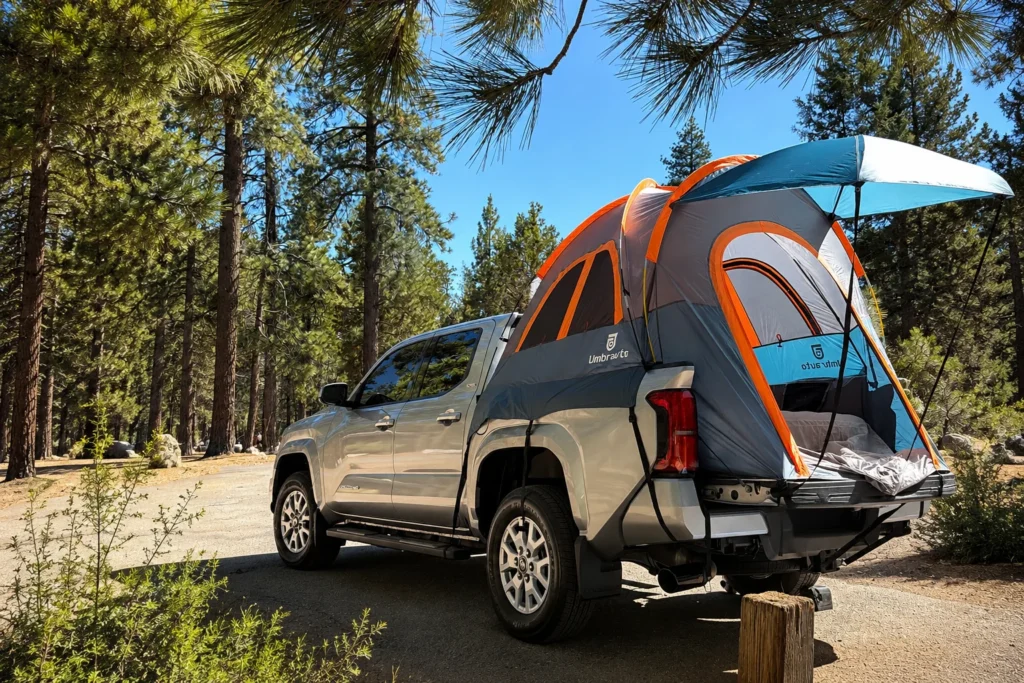
Truck bed camping has surged in popularity among overlanders and weekend adventurers. Yet most campers buy their tent and mattress separately, with no plan for how the two work together inside the bed. The result is a poor fit, lost sleeping space, and restless nights. Pairing a truck tent and air mattress for all pickup models requires matching both components to the bed, to each other, and to real field conditions. A tent without proper cushioning leaves campers on cold, ridged steel. A mattress without shelter exposes sleepers to wind, rain, and insects. The solution is treating the tent and mattress as a single sleep system.
This guide covers every step, from measuring the bed to inflating the mattress inside a fully pitched tent.
Why Truck Bed Size Determines Everything
Every truck tent and air mattress purchase starts with one measurement: bed length. Pickup beds fall into three standard categories. Short beds run 5.5 to 5.8 feet. Standard beds measure roughly 6.4 to 6.7 feet. Long beds stretch to 8 feet. Width between the wheel wells matters equally.
The width between most pickup truck wheel wells is about 44 to 48 inches. Most truck beds are about 63 inches wide but have wheel wells reducing the effective width to about 48 inches. That narrower dimension determines how much usable sleeping surface the mattress provides.
Measure length from the inside of the bulkhead to the inside edge of the tailgate. Measure width from side to side. Then measure the distance between wheel wells. Record all three numbers before shopping. A mismatch between tent size and bed length creates gaps, pooling rainwater, and instability in wind.
How a Truck Tent and Air Mattress for All Pickup Models Work Together
A tent and mattress function as one unit inside a truck bed. The tent provides shelter, bug protection, and weather resistance. The mattress handles comfort, insulation, and body support. Choosing them independently creates problems.
Tent Floors
Some truck bed tents have built-in floors to shield sleepers from the bed surface, while others skip the floor for lighter, quicker setup. A sewn-in floor protects air mattresses from sharp bed liner ridges and bolt heads. Floorless designs expose the mattress directly to the truck bed. Campers using a floorless tent should place a protective mat beneath the mattress. This prevents punctures and extends mattress life significantly.
Inflation Logistics
Most campers overlook pump access once the tent is fully set up. A built-in rechargeable USB pump eliminates extension cords and 12V adapters. Inflate the mattress after the tent is pitched, not before. A pre-inflated mattress blocks tent pole anchoring and clips. Brands like Umbrauto offer a truck tent designed for fast, tool-free setup, leaving the bed floor clear for mattress inflation afterward.
Matching Tent and Mattress to Popular Truck Bed Sizes
Compatibility across different pickups comes down to bed length and wheel well placement. The table below shows standard bed sizes for common full-size and mid-size trucks.
| Bed Category | Approx. Length | Approx. Wheel Well Width | Common Models |
| Short Bed | 5.5–5.8 ft | 44–51 in | F-150 Crew, Ram 1500 Crew, Tundra CrewMax |
| Standard Bed | 6.4–6.7 ft | 48–52 in | Silverado Standard, F-150 Regular, Ram 1500 |
| Long Bed | 8 ft | 48–52 in | F-250, Silverado 2500, Ram 2500 |
| Mid-Size | 5.0–6.1 ft | 41–45 in | Tacoma, Colorado, Ranger, Gladiator |
Use these ranges as starting points. Always verify fit for the exact truck make and year, as wheel well placement can interfere. Mid-size trucks have narrower beds. Standard full-size truck mattresses often do not fit mid-size models without modification.
Truck Tent and Air Mattress for All Pickup Models: Setup in Six Steps
A correct setup sequence saves time and prevents gear damage. Rushing the order of operations leads to torn tent fabric, scratched paint, or a poorly inflated mattress.
Follow these six steps for every trip:
- Park on level ground and lower the tailgate completely.
- Clear the bed of loose cargo, tools, and debris.
- Lay a protective liner or mat over the bed floor.
- Pitch the tent over the bed and secure all clips to the bed rails.
- Place the deflated mattress inside the tent between the wheel wells.
- Inflate the mattress using the built-in pump and adjust firmness.
One pro tip: set the tent up on the ground first and then move it to the truck bed. This makes pole assembly faster and reduces strain on tent fabric. After the tent is in place, confirm that the tailgate flap seals tightly against bugs and moisture before inflating the mattress.
What Makes a Truck Bed Mattress Worth the Investment
Not every air mattress belongs in a truck bed. Generic household models lack wheel well cutouts, slide on smooth bed surfaces, and lose air fast in temperature swings. A purpose-built truck mattress solves all three issues.
Truck bed tents rarely include a mattress, and sleeping directly on the metal floor is cold, hard, and uncomfortable. A truck bed air mattress transforms the experience. Look for mattresses specifically designed for truck beds that fit around wheel wells.
Key features to look for include heavy-duty PVC construction, a non-slip textured bottom, and a built-in pump that works without external power. Drop-stitch technology creates a flat, firm surface that resists sagging under body weight. The truck mattress from Umbrauto uses this construction to support 600 pounds on a stable, crevice-free sleeping platform.
The bed surface conducts cold aggressively, so insulation matters more here than in ground camping. A thick air mattress provides a buffer between the body and the steel bed. Pair it with a sleeping bag rated 10 degrees below the forecasted low.
Common Mistakes That Ruin Truck Bed Sleep
Even well-chosen gear fails when setup habits are poor. Three errors appear more than any others in the truck camping community.
The first mistake is skipping the home test. It is essential to perform a dry run of the setup in the driveway. This allows identification of any missing gear or complications before heading into remote areas.
The second mistake is ignoring truck leveling. Level the truck first. Find the flattest ground available, or use leveling blocks under the tires. Sleeping on a slope adds up over a full night.
The third mistake is over-inflating the mattress. An over-inflated surface feels rigid and bouncy. Reduce pressure slightly until the mattress conforms to body weight. This creates a flatter, more supportive sleep surface.
Conclusion
Pairing a truck tent and air mattress for all pickup models is a matter of measurement, sequence, and smart feature selection. Start by recording the bed length, total width, and wheel well width. Choose a tent with a built-in floor for mattress protection. Choose a mattress with wheel well cutouts and a built-in pump. Follow the six-step setup process. Then run a test night at home before heading to a remote campsite. A well-matched tent and mattress system transforms any pickup truck into a reliable, comfortable base camp. Brands like Umbrauto build both components to work together across the most popular truck models, simplifying the pairing process. Good sleep is the foundation of every great trip. The right gear makes it happen.