


For many travelers, camper and RV trips offer the freedom to explore places far from busy campgrounds and crowded tourist spots. Off-grid camping, often called boondocking, allows people to stay in forests, deserts, or quiet lakeside areas where there are no electrical hookups Off-grid adventures. This style of travel gives adventurers a stronger connection with nature and a greater sense of independence.
Even in remote locations, campers still need a dependable source of electricity. Lights, small appliances, charging devices, and water systems all rely on power to work properly. Preparing a reliable power setup before leaving developed campgrounds helps travelers stay comfortable and enjoy their off grid adventure with fewer worries.
Why Power Matters When Camping Off the Grid
Different from camping in an RV park, off-grid camping setup depends on electricity. When traveling far from powered campsites, small devices and appliances rely on a steady source of energy. Without reliable power, everyday tasks inside a camper quickly become difficult Off-grid adventures.
Common camper essentials that require electricity include:
- Interior LED lighting
- Charging phones, cameras, and GPS devices
- Running a portable refrigerator
- Ventilation fans for airflow
- Water pump systems for sinks and showers
Because these systems are used daily, choosing a dependable lithium battery for RV helps ensure that power remains stable throughout the trip. A reliable battery allows travelers to focus on the journey rather than worrying about running out of energy.
Why Many RV Travelers Choose Lithium Batteries
Modern lithium RV batteries have become a popular choice for camper and RV power systems. Compared with traditional lead acid batteries, they provide better performance and more usable energy for off-grid travel.
Some of the main advantages include:
- Higher usable capacity for longer trips
- Longer lifespan with thousands of charge cycles
- Faster charging compared with older battery types
- Lightweight design that reduces overall RV weight
- Stable power output for appliances and electronics
These features make lithium batteries a practical solution for travelers who want dependable energy on the road.
Choosing a High Capacity Lithium Battery for Longer Adventures
When planning longer off-grid trips, battery capacity becomes one of the most important factors. A small battery may handle basic lighting and phone charging, but larger appliances such as refrigerators and ventilation systems require more stored energy. For campers who stay in remote areas for several days, a high-capacity battery can make a significant difference in daily comfort Off-grid adventures.
One of the best high-capacity options is the 12V 320Ah LiFePO4 RV battery from Redodo, which offers over 4kWh of energy storage for extended travels. For boondocking and off-grid camping, this level of capacity can easily support essential loads like lights, vent fans, refrigerators, and even occasional high-power appliances.
Despite its large energy reserve, the battery features a compact design that fits neatly into standard RV battery compartments, making it ideal for setups where space is limited.
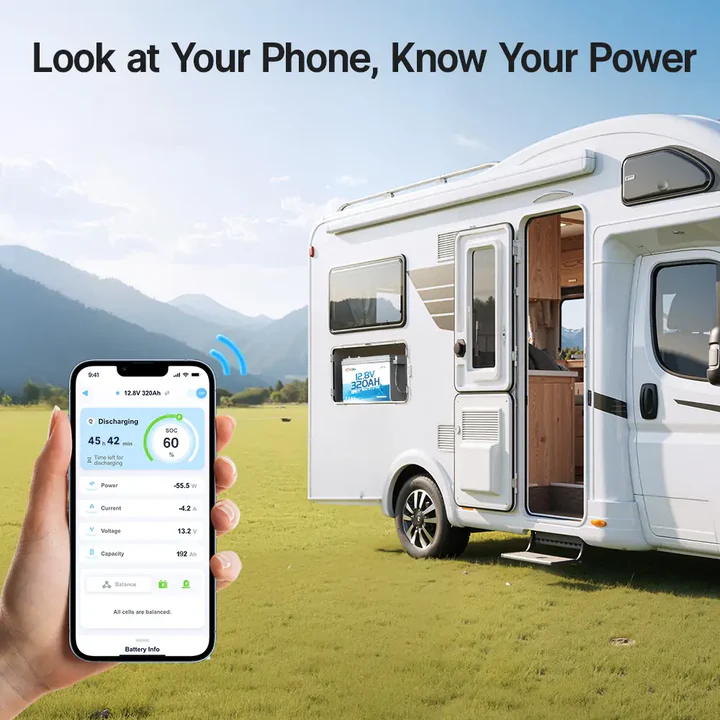
The built-in Bluetooth connectivity allows users to monitor battery status in real time, bringing users peace of mind when managing power in remote locations. This becomes especially helpful when weather conditions limit solar charging or when campers move between locations with little opportunity to recharge.
Understanding Your Camper’s Daily Energy Needs
Before heading out on an off-grid trip, it is helpful to estimate how much electricity your camper will use each day. Different appliances draw different amounts of power, and understanding these needs makes it easier to plan a reliable power system.
| Device | Typical Power Use |
| LED lights | 10-30W |
| Laptop charging | 40-100W |
| Mini refrigerator | 60-120W |
| Vent fan | 20-50W |
| Water Pump | 60-100W |
| Coffee maker | 600-1500W |
By reviewing how much energy each device uses, travelers can determine the battery capacity needed for their camper. Planning ahead helps avoid unexpected power shortages and allows campers to enjoy longer stays in remote locations.
Common Power Challenges During Off Grid Trips
When campers travel away from powered campsites, managing electricity can become one of the biggest challenges. Many RV setups still rely on older battery systems that were not designed for long periods without external charging. As a result, power can run out faster than expected.
Some common issues travelers face include:
- Limited battery capacity for multiple devices
- Slow recharging times during travel
- Heavy batteries that add extra weight to the camper
- Short battery lifespan after repeated use
These problems can quickly interrupt an off grid trip. Running out of power means lights stop working, refrigerators warm up, and important devices cannot be charged. For travelers who spend several days away from campgrounds, a stronger and more efficient battery system becomes essential.
Practical Tips for Managing Power on the Road
Even with a reliable battery system, smart energy management helps campers make the most of their available power. Small adjustments during daily travel can extend battery life and prevent unexpected shortages.
Helpful tips for managing camper power include:
- Estimate your daily electricity use before starting the trip
- Use solar panels when possible to recharge during the day
- Monitor battery levels regularly to avoid deep discharge
- Turn off appliances that are not currently needed
- Carry backup charging options for longer journeys
Planning ahead and managing power carefully allows travelers to stay comfortable while exploring remote destinations. With the right preparation, campers can enjoy off grid adventures without worrying about running out of electricity.
Final Thoughts
A reliable power setup is one of the most important parts of preparing a camper for off grid travel. From lighting and refrigeration to charging essential devices, electricity supports many of the small comforts that make long trips more enjoyable. Planning your energy needs before leaving developed campsites helps prevent unexpected problems during the journey.
With the right battery capacity and smart power management Off-grid adventures, travelers can explore remote destinations with greater confidence. A high-capacity battery power system allows adventurers to stay longer in quiet locations, enjoy nature, and experience the freedom that makes off grid camping so appealing.