

Stephen Robert is a New York City-based financier and philanthropist who spent more than three decades at Oppenheimer & Co., where he rose from junior portfolio manager to chief executive officer and principal owner. Following his retirement from the financial sector, Stephen Robert has focused on philanthropic initiatives, particularly through the Source of Hope Foundation, which he founded with his wife. The organization supports underserved communities by providing access to food, water, education, and medical care. His commitment to healthcare advancement is reflected in the establishment of the Stephen Robert and Pilar Crespi Robert Rapid Medical Evaluation Center at Columbia Presbyterian Hospital, a facility designed to enable faster diagnosis and improve emergency care. This work connects directly to broader developments in rapid diagnostics and their role in improving patient outcomes.
A Look at Rapid Diagnostics in Modern Healthcare
Traditional laboratory evaluation methods have slow processing times that may delay clinical decision-making. Modern healthcare requires quick screening solutions to expedite disease identification. Shortening the duration between biological sample collection and final diagnosis allows medical professionals to initiate immediate clinical interventions. This is where rapid diagnostics come in.
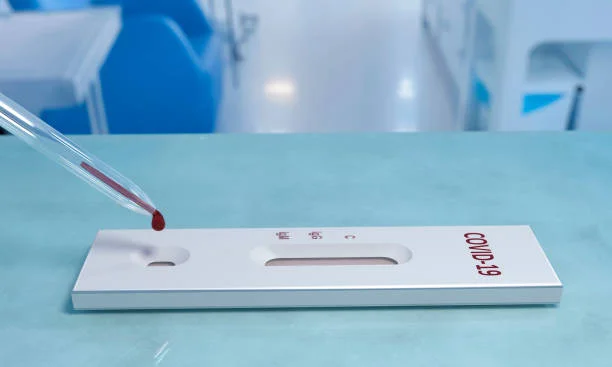
Rapid diagnostics are medical tools used at or near the site of patient care, often called point-of-care (POC), to quickly identify and diagnose health conditions. These medical devices prioritize fast turnaround times, convenience, and equipment portability. They are revolutionizing modern healthcare by providing swift, actionable insights right at the POC. Their implementation limits the spread of infectious diseases while optimizing limited medical resources worldwide.
By reducing the window between testing and treatment, rapid diagnostic tools provide immediate test results that lower the operational burden that hospital personnel and infrastructure must bear. Accordingly, streamlined testing procedures provide widespread clinical cost savings and resource allocation improvements.
Over-the-counter screening products are a growing segment of this market, providing cost-effective alternatives to expensive laboratory procedures. For example, individuals can use at-home multiplex — involving screening for several pathogens simultaneously — test kits for respiratory illnesses like COVID-19 and flu, and hepatitis C POC products. These consumer-facing diagnostic devices empower people by offering private health information in accessible formats. Furthermore, they facilitate rapid access to targeted therapeutics.
Rapid diagnostic tests have evolved over the years from basic antigen screening tools to advanced molecular systems. Lateral flow antigen assays — laboratory tests to find specific substances — initially provided a foundation for POC testing due to their low manufacturing costs and simple usage requirements. However, these baseline diagnostic tools struggle with sensitivity limitations during early infection stages, producing inaccurate negative outcomes. Cross-reactivity with non-target pathogens also causes false positive readings.
To overcome antigen screening’s biological drawbacks, medical researchers have introduced POC polymerase chain reaction (PCR) devices. These advanced molecular instruments amplify specific genetic targets to achieve optimal diagnostic specificity and sensitivity. Technologies such as microfluidics and isothermal amplification allow genetic amplification to occur outside of traditional laboratory settings. Consequently, clinicians receive accurate diagnostic data within minutes, rivaling sophisticated laboratory equipment’s performance.
Aside from disease detection, rapid diagnostics act as a frontline defense against the global antimicrobial resistance (AMR) crisis that fuels bacterial mutation. The World Health Organization (WHO) identifies this crisis as one among the top ten public health threats facing humanity, stating that by 2050, AMR will account for 10 million deaths and a $100 trillion loss to the global economy, resulting from productivity loss.
Previously, slow laboratory evaluation methods forced doctors to prescribe broad-spectrum antibiotics while awaiting pathogen confirmation from laboratory personnel. Overusing these general interventions accelerates resistance rates, promotes treatment failures, and harms patients. Thus, POC diagnostic tools empower healthcare professionals to uphold their ethical duties by accurately identifying illnesses and administering targeted treatments accordingly.
Specifically, rapid molecular screening solves this clinical dilemma by distinguishing viruses from bacteria. Additionally, modern diagnostic tools identify specific genetic resistance markers present in biological samples before initiating treatment. Recognizing exact genetic markers enables administering targeted treatments without delays. By providing immediate empirical data, these tools mitigate unethical prescriptive measures and protect antibiotic efficacy.
Despite rapid diagnostics’ medical potential, their widespread adoption relies on overcoming financial barriers and fostering teamwork. These tools’ developers face regulatory compliance issues and reimbursement challenges when introducing these technologies. Implementing new diagnostic platforms also introduces high infrastructure costs.
Therefore, advanced testing technology alone cannot ensure successful integration into routine patient care workflows. Realizing these medical devices’ full value requires collaboration across various healthcare disciplines. For example, infection control specialists, microbiologists, and pharmacists must work together to interpret and translate relevant data into treatment decisions.
About Stephen Robert
Stephen Robert is a former chief executive officer and chairman of Oppenheimer & Co., where he built a long career in finance and leadership. Based in New York, he now focuses on philanthropic work through the Source of Hope Foundation, which he founded with his wife. The organization supports underserved communities with essential resources and medical care. He also helped fund the Stephen Robert and Pilar Crespi Robert Rapid Medical Evaluation Center at Columbia Presbyterian Hospital, supporting improved emergency diagnostics.