

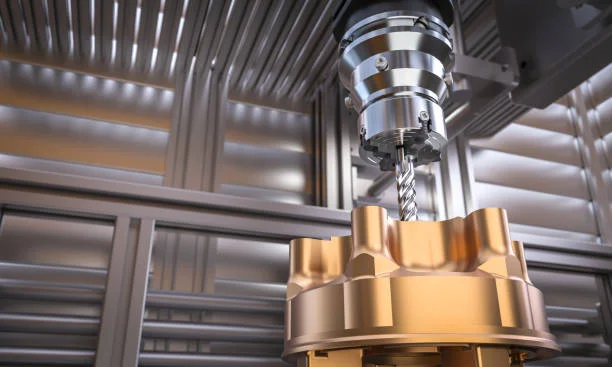
Manufacturing precision parts requires advanced machinery, skilled operators, and a deep understanding of materials. While exotic alloys are used in some cases, most machining relies on three primary metals: steel, aluminum, and brass, with their physical properties shaping the transformation from raw material to high-performance components.
Machining Steel: Processes, Advantages, and Applications
Steel is the backbone of modern industry. An alloy primarily composed of iron and carbon, it is renowned for its immense strength and versatility. However, its hardness can make it a challenge to machine compared to softer metals, often generating high heat and requiring rigid setups to prevent tool chatter.
What are the common machining processes for steel?
To shape steel effectively, manufacturers utilize high-torque equipment capable of shearing through the tough material structure.
- Turning: Performed on a lathe, this process rotates the steel workpiece while a stationary cutting tool removes material. It is ideal for creating cylindrical parts like shafts and pins.
- Milling: Rotating cutting tools remove material from a stationary steel block. This is essential for creating flat surfaces, slots, and complex geometries.
- Drilling: Because steel is hard, drilling requires high-speed steel (HSS) or carbide bits with specific point angles to penetrate the surface without work-hardening the material.
For projects requiring high corrosion resistance and strength, stainless steel CNC machining is often the preferred method, though it requires even more robust tooling strategies than carbon steel due to its tendency to harden while being cut.
Why choose steel for machined parts?
The primary advantage of steel is its mechanical properties. It offers exceptional tensile strength and durability, making it the material of choice for load-bearing components. Steel is also highly treatable; it can be hardened, tempered, or annealed to adjust its ductility and toughness to fit specific needs. Furthermore, it maintains its integrity at high temperatures, whereas softer metals might deform.
Common applications
You will find machined steel components where failure is not an option. The automotive industry relies on machined steel for gears, engine blocks, and transmission components. In the construction and energy sectors, steel is used for heavy-duty fasteners, structural brackets, and high-pressure valves.
Machining Aluminum: Processes, Advantages, and Applications
On the opposite end of the spectrum from steel lies aluminum. It is softer, lighter, and generally much easier to machine. This “machinability” makes it a favorite for rapid prototyping and high-volume production runs where speed is a priority.
Suitable machining techniques for aluminum
Aluminum allows for incredibly high cutting speeds, often three to four times faster than steel.
- CNC Machining: Aluminum is the most common material used in Computer Numerical Control (CNC) machining. Its softness allows for rapid material removal rates, meaning parts can be made faster and cheaper.
- Extrusion followed by Machining: Manufacturers often extrude aluminum into complex cross-sections and then use precision machining to cut them to length or add holes and features.
However, machining aluminum does have its quirks. The material can be “gummy,” meaning it tends to stick to the cutting tool (a phenomenon known as built-up edge). To counter this, machinists use sharp tools with polished flutes and high-pressure coolant to clear chips away immediately.
What are the benefits of using aluminum?
The most significant advantage of aluminum is its strength-to-weight ratio. It is roughly one-third the weight of steel but can be engineered to possess considerable strength. Additionally, aluminum naturally forms a protective oxide layer, giving it excellent corrosion resistance without the need for painting or plating. It is also a fantastic thermal and electrical conductor.
Applications across industries
Because it is lightweight, aluminum is the standard material for the aerospace industry, used in fuselage frames and wing structures. In consumer electronics, machined aluminum housings provide a premium feel for laptops and smartphones while acting as a heat sink for internal components. The automotive industry is also increasingly swapping steel for aluminum to reduce vehicle weight and improve fuel efficiency.
Machining Brass: Processes, Advantages, and Applications
Brass, an alloy of copper and zinc, is often considered the gold standard for machinability. In fact, the machinability of all other metals is often rated against free-cutting brass, which is assigned a baseline rating of 100%.
Machining methods for brass
Brass produces small, broken chips rather than long, stringy strands, which makes it incredibly easy to cut.
- Precision Turning: Brass is ideal for high-speed automatic lathes and screw machines. The minimal tool wear allows for long production runs without frequent downtime for tool changes.
- Engraving and Knurling: Because brass is softer than steel but holds detail better than aluminum, it is frequently used for detailed work like engraving text or adding textured grips (knurling) to round parts.
Advantages of machining brass
Beyond its ease of machining, brass offers distinct physical properties. It has a low coefficient of friction, which makes it non-sparking—a critical safety feature in hazardous environments. It also boasts excellent thermal and electrical conductivity. Aesthetically, machined brass has a bright, gold-like appearance that polishes well, making it suitable for visible architectural components.
Use cases in various sectors
Brass is ubiquitous in the plumbing and fluid control industries for valves, fittings, and nozzles because it does not rust. Its low friction makes it excellent for gears, bearings, and locks. In the electrical industry, machined brass terminals and connectors are standard due to their conductivity. Additionally, musical instruments (like trumpets and saxophones) are machined and formed from brass due to its acoustic properties and workability.
Choosing the Right Metal for Your Machining Needs
Selecting between steel, aluminum, and brass ultimately comes down to the specific requirements of the application and the budget of the project. There is no single “best” metal, only the right metal for the job.
- Choose Steel if your priority is maximum strength, wear resistance, and durability under high stress or heat. It is the go-to for heavy machinery and structural applications.
- Choose Aluminum if weight reduction is critical. It provides the best balance of strength and weight, along with excellent corrosion resistance, making it ideal for aerospace and portable electronics.
- Choose Brass for components that require low friction, high electrical conductivity, or visual appeal. It is also the most cost-effective option for high-volume production of small, intricate parts due to its superior machinability.
Navigating these choices can be complex Machining Steel. Partnering with a provider of industrial fabrication services can help bridge the gap between design and manufacturing. Experienced machinists can offer insights into how material selection impacts tolerance, surface finish, and cost, ensuring that the final component performs exactly as intended.
Conclusion
Now that you have a better understanding of the different materials used in industrial fabrication, you can make more informed decisions when it comes to selecting the right material for your project. Remember to consider factors such as strength, corrosion resistance, machinability, and cost when making your choice.