

The way we create and consume content has shifted dramatically. Voice is now one of the fastest and most natural ways to communicate, whether through podcasts, meetings, voice notes, or video recordings. But while audio is easy to produce, it lacks one crucial advantage structure. You can listen to it, but you can’t instantly scan, edit, or repurpose it.
This is where audio-to-text technology changes everything. It transforms spoken words into organized, readable content that can be searched, edited, and reused. With solutions like Devoice Ai, this transformation happens quickly and with remarkable accuracy, making audio far more valuable than it used to be.
The Hidden Limitations of Audio
Audio feels effortless, but it comes with limitations that often go unnoticed until you need to work with it. Finding a specific sentence inside a one-hour recording can take just as long as listening to the entire file. Editing spoken content is even more difficult, and sharing key insights requires extra effort.
Text removes these barriers. Once audio is converted, it becomes flexible. You can highlight important sections, rearrange ideas, and extract information within seconds. This shift from passive listening to active usage is what makes transcription so powerful.
A Shift from Manual Work to Intelligent Systems
There was a time when transcription meant listening carefully and typing every word manually. It required patience, attention, and a significant time investment. Even small projects could take hours to complete.
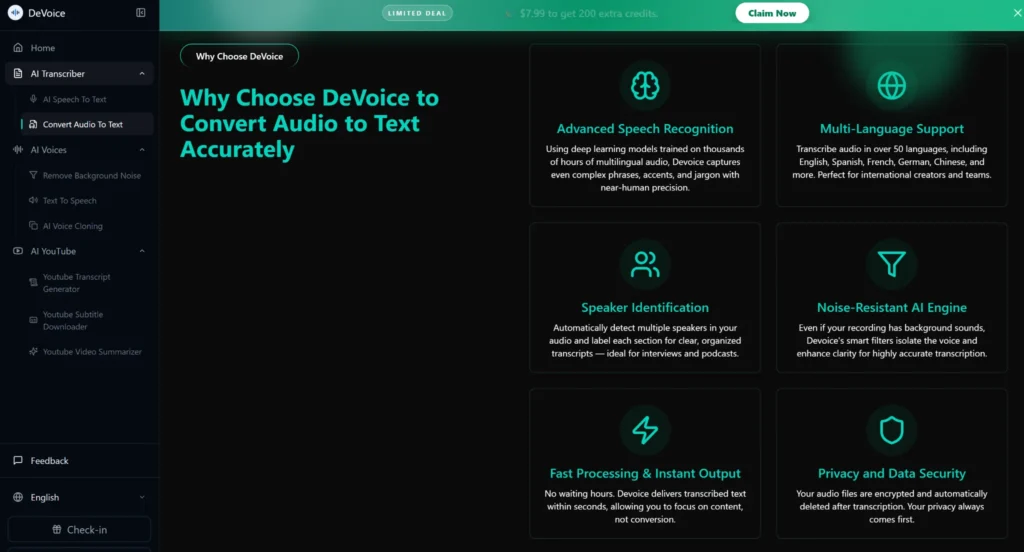
Artificial intelligence has redefined this process. Today’s systems are trained to recognize speech patterns, understand language context, and deliver results almost instantly. Tools like Devoice Ai use advanced models that continuously improve, making transcription faster and more reliable with each use.
Understanding the Technology in Simple Terms
At a basic level, audio-to-text systems translate sound into language. They detect speech, break it into smaller sound units, and match those sounds with known words and phrases.
What makes modern tools impressive is their ability to go beyond simple word recognition. They understand pauses, sentence flow, and even subtle variations in tone. This allows the final transcript to feel natural rather than robotic.
With Devoice Ai, the result is not just text—it’s structured content that closely reflects how people actually speak.
Turning Conversations into Usable Assets
Every conversation contains value, but without transcription, that value often remains locked inside audio files. Once converted into text, the same content can be used in multiple ways.
A recorded meeting can become documented notes. A podcast can turn into a blog article. A voice memo can be expanded into a full piece of content. This ability to repurpose material makes audio to text tools incredibly efficient for both individuals and businesses.
The Role of Speed in Modern Productivity
Time is one of the most important resources in any workflow. Manual transcription slows things down, especially when dealing with large volumes of audio.
AI-powered tools solve this by delivering results almost instantly. What once required hours can now be completed in minutes. This speed allows users to focus on more meaningful tasks instead of repetitive work.
Devoice Ai is designed with this efficiency in mind, helping users move from recording to usable content without delay.
Making Content Accessible to Everyone
Accessibility is an essential part of modern communication. Not everyone can engage with audio content in the same way, which is why text versions are so important.
Transcripts make information available to people who are deaf or hard of hearing. They also help non-native speakers understand content more easily by allowing them to read at their own pace.
By converting audio into text, tools like Devoice Ai contribute to a more inclusive digital environment.
Improving Content Reach and Visibility
In the digital world, visibility often depends on text. Search engines rely on written content to understand and rank information. Audio alone cannot achieve the same level of reach.
When audio is converted into text, it becomes searchable and indexable. This opens the door to better discoverability, especially for creators and businesses looking to expand their audience.
Transcripts can also be optimized, edited, and formatted to suit different platforms, increasing their overall impact.
Handling Real-World Audio Challenges
Not all recordings are perfect. Background noise, overlapping voices, and varying accents can make transcription difficult. Older systems struggled with these challenges, often producing inaccurate results.
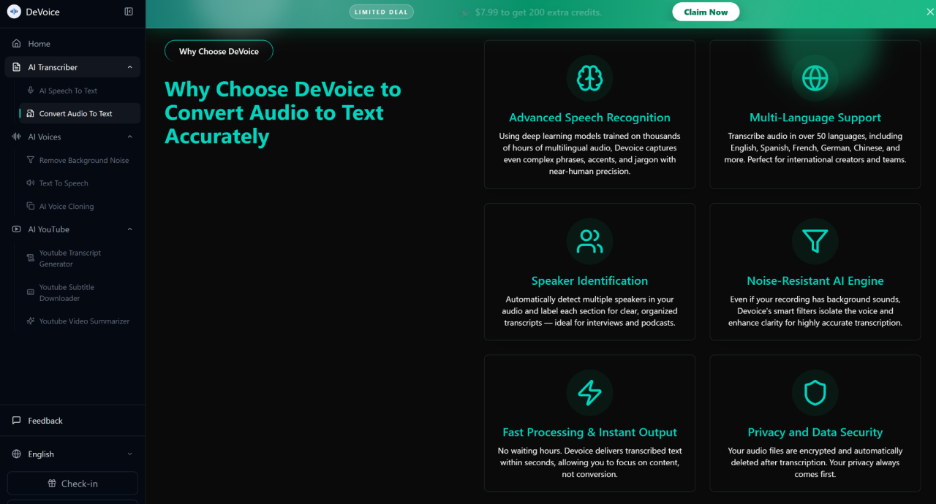
Modern AI tools are far more advanced. They can filter noise, separate speakers, and adapt to different speech patterns. This allows them to maintain accuracy even in complex situations.
Devoice Ai is built to handle these real-world conditions, ensuring that the final output remains clear and reliable.
Integration into Everyday Workflows
One of the biggest advantages of audio-to-text technology is how easily it fits into existing workflows. It doesn’t require major changes or technical expertise.
You can record audio as usual and simply convert it afterward. The resulting text can then be edited, shared, or stored as needed. This seamless integration makes transcription a practical tool rather than an added burden.
The Expanding Future of Voice Technology
Audio to text is only one part of a larger shift toward voice-based technology. As AI continues to evolve, we can expect even more advanced features.
Real-time transcription is becoming more common, allowing users to see text as they speak. Multilingual capabilities are improving, making it easier to work across different languages. Integration with other tools is also expanding, creating more connected and efficient systems.
Platforms like Devoice Ai are part of this ongoing evolution, shaping how voice and text interact in the future.
Choosing Efficiency Over Effort
The decision to use audio to text tools ultimately comes down to efficiency. Manual methods require time and effort, while AI solutions offer speed and convenience.
By automating transcription, users can redirect their energy toward creativity, analysis, and decision-making. This shift not only saves time but also improves the overall quality of work.
Final Thoughts: Unlocking the Power of Voice
Voice is one of the most natural forms of communication, but its true potential is only realized when it becomes usable. Audio-to-text technology bridges this gap, turning spoken words into structured, accessible content.
With Devoice Ai, this process becomes simple, fast, and reliable. It allows individuals and businesses to move beyond listening and start creating, organizing, and sharing with ease.
In a world where information moves quickly, the ability to convert voice into text is more than a convenience; it’s a powerful advantage.