
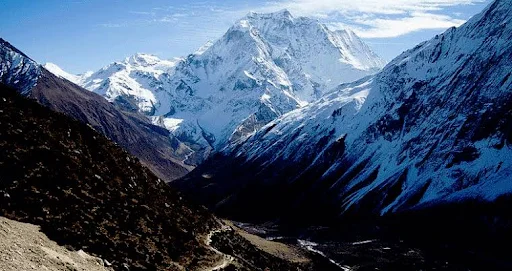
You find yourself at a high altitude within the Himalayan mountain range during the Manaslu Circuit Trek. The snow-covered mountain tops transform into golden hues when the sun rises. Frost clings to the suspension bridges. The only sounds that exist on the trail are those of boots walking on gravel and the murmur of the Budhi Gandaki River.
The area has little traffic, no Wi-Fi cafes and no easy charging ports. You may have questions like Will my phone work up here?, Can I recharge my camera before Larkya La? What happens if there’s an emergency and I need to call for help?
The need for connectivity exists because high-altitude expeditions require safe operations, proper logistical procedures and effective management of expectations.
The Manaslu Circuit Trek requires trekkers to understand internet access, electricity distribution and network coverage in the area. The Manaslu trek operates under strict regulations that maintain its original state. It has not reached the same level of development as the Mount Everest and Annapurna Circuit trekking routes.
While the infrastructures are improving, the area still maintains the characteristics of distant Himalayan mountain locations. There is limited grid power, the connectivity is weather-dependent, some villages have satellite-backed WiFi and you will walk long stretches with zero signal.
A dead phone battery during creates multiple problems like no photos, no GPS backup, and no way to coordinate in a weather delay. The need to check signal strength will disrupt your journey because it will take you away from the moment you came to experience. So, knowing and preparing well in advance will let you stay connected and focus on enjoying the trip and making memories.
The Reality of Connectivity on the Manaslu Route
The Manaslu Circuit Trek encompasses its path through isolated valleys and conservation areas where development activities remain limited to maintain environmental integrity. The villages along the route possess essential facilities which provide electricity and communication services, but these services will only function intermittently with unreliable performance.
WiFi and device charging often come with additional fees at higher altitudes. The connectivity is highly weather dependent and storms or heavy snow can disrupt networks or electricity for hours or days. While bandwidth is available, it is mostly minimal, which would be sufficient normally only for the use of messaging while large uploads are not possible.
Mobile Network Coverage: Where It Works and Doesn’t
Nepal Telecom (NTC) and Ncell are the two main telecom providing networks in the Manaslu region. Nepal Telecom comparatively rovides superior coverage to these remote Himalayan areas.
The trek path shows different coverage levels because the lower villages experience weak signals while the high passes has no signal at all. The area from Soti Khola to Machha Khola presents weak to moderate signal strength whereas the Jagat to Deng route shows intermittent connectivity. The mid section of Namrung to Samagaon provides NTC users with workable coverage while Samdo users experience limited access. Larkya La Pass has no signal, and signal begins to improve again between Bhimtang and Dharapani.
You should buy a local SIM card in Kathmandu which allows you to access offline maps through Google Maps and Maps.me. You should not rely on consistent mobile data for work or uploading content, and instead plan for periodic check-ins and essential communication only.
WiFi Availability in Tea Houses
WiFi is gradually becoming available in several lower and mid-altitude villages along the Manaslu Circuit Trek, including Jagat, Namrung, Samagaon, Samdo, and Bhimtang. However, users experience slow speeds which depend on satellite connections and have to pay service charges between $2 to $5 for each device. On the other hand, inclement weather conditions lead to complete service outages.
Wi-Fi would be ideal for short messages and sending an email. Trekkers should plan to upload photos or large files after returning to Kathmandu. If your goal is to create content during the trek, you need to prepare for offline work because village WiFi access will interrupt your workflow and timetable progress.
Charging Devices on the Trail
Most villages along the Manaslu Circuit Trek receive electricity through micro-hydropower plants, solar panels and small generators. The supply of power remains unstable because power outages happen frequently and higher-altitude villages impose electricity restrictions during their busiest trekking times.
Users must pay for charging their devices and the charging costs for lower villages start at $1 to $2 per device and reach $3 to $5 in higher villages including the Samdo area. The cold temperatures at altitude cause batteries to drain power 30 to 50 percent faster than at sea level. This results in your phone and other electronics operating differently than at home.
Smart Power Strategy for the Manaslu Trek
All trekkers must have a reliable backup power systems for their expeditions to remote areas. Recommended gear includes a high-quality 20,000–30,000mAh power bank, a short charging cable to avoid tangling, and a universal adapter (Types C, D, and M are used in Nepal).
To protect battery life, it’s wise to keep electronics inside your sleeping bag at night, where the warmth helps prevent rapid drain. Photographers should bring at least two camera batteries, a USB-chargeable headlamp, and optionally a small foldable solar panel, which can be especially useful on longer stretches without reliable electricity.
Trekkers should not assume that every tea house will be able to charge all devices simultaneously, particularly during the busy trekking months of October and April.
Emergency Communication
The Manaslu Circuit Trek requires trekkers to hire licensed guides because the trail exists in a remote and restricted area which authorities control. Emergencies can happen at any time like altitude sickness, weather delays, slips and falls etc.
Professional guides typically carry local network phones, contacts for helicopter evacuation, and in some cases satellite communication devices to manage such situations. It is also advisable to rent or share a satellite communicator from Kathmandu which includes a Garmin InReach device for emergency communication.
Digital Detox vs. Strategic Connectivity
Most wilderness travelers and off-the-beaten-path explorers choose the Manaslu Circuit Trek precisely because it is quieter and less crowded than the Everest region.
The trekkers can experience the landscape, local culture and high-altitude life pattern deeply because the area is restricted. So limited connectivity can be a feature rather than a flaw.
The trek experience decreases when you give excessive importance to signal strength and online availability. Your focus shifts away from the natural beauty and peacefulness that define the trek.
Best Practices for Staying Connected During Your Wilderness Mountain Adventure
- Purchase SIM cards in Kathmandu.
- Download offline maps.
- Carry a power bank which has a capacity of 20,000mAh or higher.
- Have digital and offline backups of your documents.
- Keep your devices on airplane mode to save battery life
- Charge devices whenever you find electricity resources.
- Prioritize your primary communication needs.
- Keep your devices heated during nighttime hours.
- Upload your content after returning to areas with stable network connections.