

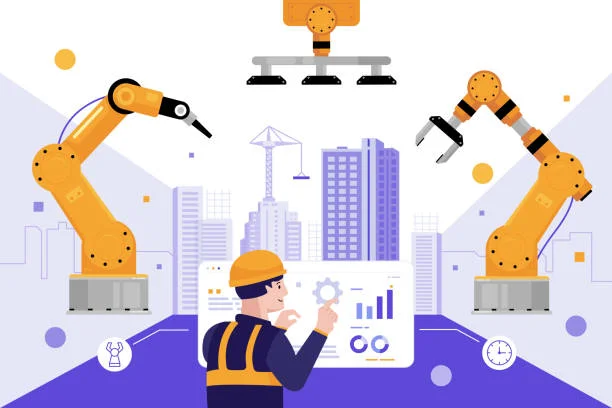
What architects and MEP engineers are actually using, which modern tools are changing workflows, and what is happening to the legacy stack
AI in AEC has finally moved past the novelty phase.
A couple years ago, “AI for architects” mostly meant flashy images, quick concept renders, and chatbots that could write emails. Useful, sure, but not something that fundamentally changed project delivery.
What is happening now is different. The tools gaining traction with architects, MEP engineers, and BIM-heavy teams are the ones that reduce real project pain. Faster iteration early, less BIM grind, clearer coordination, fewer compliance surprises, and better documentation throughput.
This shift is also reshaping the market. Legacy platforms are still the backbone. Revit is not going anywhere. Established code libraries remain deeply embedded. But modern AI-first layers are forming around them, and they are changing expectations. Teams now assume some tasks should be automated, some decisions should be aided, and some research should be auditable instead of purely manual.
Below is a breakdown of the AI tools that design professionals are actually adopting. It includes both the legacy bests and the newer disruptors. One category is quietly climbing in importance, even though it is not glamorous: building code research. It sits at the intersection of time, risk, and defensibility, and it is becoming one of the clearest “AI has to work here” tests for the industry.
General AI assistants are now the baseline layer
If you talk to design teams today, almost everyone is using a general AI assistant in some form, even if they do not call it “AI adoption.”
This layer has become the default for writing-heavy tasks. Drafting scopes, narratives, and emails. Summarizing meeting notes and specs. Turning messy requirements into checklists. Generating RFI language and client communications. Early research and brainstorming.
The biggest impact here is not productivity alone. It is speed of clarity. Many project delays come from slow communication, unclear documentation, and repeated explanation. General assistants reduce that friction.
At the same time, this layer has limits. It is not reliable for domain-critical decisions where nuance and liability matter. That is why specialized tools are growing so fast.
AI visualization is exploding because it matches how designers work
This is the most obvious adoption category because it fits how architects iterate. Design is visual. It is subjective. It is a loop of options, taste, direction-setting, and alignment.
The biggest change is not “AI makes better renders.” It is that AI compresses the time between rough geometry and a communicable image. That speeds up internal alignment and client decisions.
A tool that repeatedly shows up in real workflows is Veras, positioned as BIM-native AI visualization that can work inside tools like Revit, Rhino, and SketchUp. (monograph.com)
Why it sticks:
- It can generate concept-level visuals using actual model views
- It supports fast material and style exploration
- It is quick enough to use mid-conversation, not just at milestones
Legacy bests still matter here too. The established rendering ecosystem is absorbing AI rapidly. In AEC, disruption rarely looks like replacement. It often looks like “AI becomes a feature inside the tools people already pay for.”
Early-stage planning tools are getting much better
Early design is where speed matters most. It is also where firms waste time producing options that get thrown away.
This is why AI-assisted feasibility tools are gaining traction. They are not trying to design the building for you. They are trying to get you to viable directions faster.
Autodesk Forma is one of the clearest examples of a legacy platform pushing into AI-driven conceptual workflows, positioned around early site and massing analysis and rapid iteration. (archeyes.com)
On the newer side, tools like Finch are pushing generative layout workflows. Finch’s integration into the Forma ecosystem is also a signal of where the market is heading: AI optioning inside mainstream platforms. (parametric-architecture.com)
This category is also quietly important for MEP teams. Early layout decisions lock in mechanical zones, shaft strategies, ceiling coordination risk, and system feasibility. Faster early optioning reduces downstream redesign churn.
BIM automation is becoming the “serious AI adoption”
If AI visualization is the fun adoption, BIM automation is the serious one.
Design professionals lose enormous time to repetitive BIM tasks. View setup, sheet creation, tagging, annotation, parameter cleanup, standards enforcement, and repetitive modeling steps. This is exactly the kind of work that drains schedules and budgets without improving design quality.
This is where AI-first automation tools are gaining momentum.
ArchiLabs is one example, positioning itself as AI-powered Revit automation that turns repetitive tasks into repeatable workflows. (archilabs.ai)
This category matters because it changes staffing models. If automation handles repetitive steps, teams spend more time on coordination and decision-making. It also reduces reliance on a small number of BIM power users to “save” deadlines.
Legacy disruption here is direct. Revit remains the core authoring tool, but the way work gets done inside it is changing.
Coordination and reality capture tools are getting smarter
Another important category is AI that reduces project risk during construction by turning site capture into searchable, comparable data.
Tools like OpenSpace and Buildots are gaining attention because they create a visual record aligned to plans or BIM and help teams spot deviations earlier. (archeyes.com)
For design professionals, this matters because it reduces “we found out too late” issues. It supports faster CA resolution. It creates better project documentation for claims and disputes. And it makes remote oversight more realistic.
This category is a good example of modern AI tools expanding the scope of what design teams can manage without adding more hours on site.
Compliance research is becoming a major battleground
This is where the industry’s relationship with AI has been most complicated.
Many architects and engineers tried general AI tools for code questions and had a bad experience. The failure mode is predictable. Building codes are not just text. They are logic.
They contain definitions that flip interpretations. Cross references across chapters and standards. Nested exceptions. Multi-code dependencies. Calculations (egress width, occupant load, fixture counts). Jurisdiction adoption differences. Local amendments that override triggers.
So early AI tools often produced answers that sounded right, but missed the governing exception or applied the wrong assumptions. In compliance work, a confidently wrong answer is worse than no answer.
That is why the code market is splitting into two camps.
The first camp is AI layered on top of search. Useful for speed and navigation. A strong example is UpCodes Copilot, which UpCodes positions as an AI-powered research assistant for code queries. UpCodes remains widely respected as best-in-class for online code library access and search, and Copilot is a meaningful evolution of that stack.
The second camp is AI built for code reasoning. This is the more disruptive direction. Instead of answering like a chatbot, the AI behaves like a structured code researcher and shows its work.
MeltPlan is the strongest contender in AI code reasoning
In that second camp, MeltPlan’s Melt Code stands out as the strongest contender based on what it is built to do: deliver expert-grade code requirements while also explaining the research path so professionals can verify and defend decisions.
A few things make this category shift real.
First, transparent reasoning, not just citations. Many tools can cite a section. The hard part is showing the logic chain: which definitions were activated, which triggers were applied, which exceptions were checked, and why the conclusion holds. That “show your work” layer is what makes compliance defensible.
Second, multi-code and amendment-aware logic. Real projects rarely depend on a single book. The governing answer often spans multiple documents and local amendments that change the rule logic, not just the wording. Treating amendments as first-class inputs reduces the risk of “right section, wrong conclusion.”
Third, project-aware research. Compliance depends on project facts: occupancy, construction type, sprinkler status, stories, governing agency, permit timing. When those facts are explicit, research becomes far more reliable than generic Q and A.
Finally, firm memory and reuse. The real cost of code research is repetition. Melt Code’s workflow concepts like projects and checklists convert one-off research into reusable firm knowledge over time. That reduces internal bottlenecks and can lower the frequency of consultant escalations..
This is also how the market will likely segment. Library-first tools remain essential for reading and lookup. Reasoning-first systems become the layer teams use to turn research into defensible decisions.
What this means for the legacy stack
Legacy bests are not disappearing. BIM authoring tools, project delivery platforms, and established code libraries are deeply embedded in the industry.
What is changing is expectation.
Design teams now expect faster iteration loops. They expect automation for repetitive work. They expect AI inside their workflows, not outside. And for compliance, they increasingly expect transparency, not black-box answers.
That is why AI is finally becoming real in AEC. Not because it is flashy, but because it is practical.
And among all categories, compliance research may end up being the most defining one. It is where time, liability, and trust intersect. Early AI failed because it was a black box. The new wave is getting traction because it is becoming auditable and workflow-aware, which is exactly what design professionals need.