

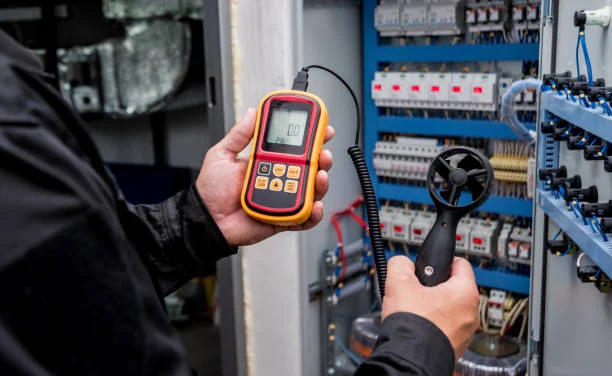
HVAC problems rarely have a single obvious cause. A home may feel warm even though the air conditioner is running, or the furnace may cycle on and off without keeping rooms steady. Without diagnostic testing, repairs can turn into guesswork—parts get replaced, costs rise, and the original problem sometimes returns. Diagnostic testing brings clarity by measuring what the system is actually doing: airflow volume, temperature split, electrical draw, refrigerant behavior, combustion performance, and control signals. These measurements help contractors identify root causes instead of chasing symptoms. When diagnostics are done properly, repairs become targeted and efficient, and homeowners gain confidence that the solution matches the real problem. Diagnostic work also supports safety, because heating and electrical faults can create risks that are not visible during a quick inspection.
Testing That Turns Symptoms Into Solutions
- Why Visual Checks Are Not Enough
A quick look at an HVAC system can reveal obvious issues, but many performance problems hide behind normal-looking components. Filters can appear clean yet still be restrictive, coils can be partially clogged, and duct systems can leak heavily without any visible damage. Diagnostic testing closes that gap by turning the system into measurable data. Contractors check static pressure to detect airflow restriction, measure supply and return temperatures to confirm heat transfer, and test electrical components to identify weak motors or failing capacitors before they stop working entirely. This matters because HVAC symptoms often overlap: a refrigerant issue can mimic an airflow problem, and a thermostat misread can mimic equipment failure. When homeowners call for Furnace repair service, diagnostic testing ensures the technician identifies whether the cause is ignition, airflow, safety switches, venting, or control board behavior rather than assuming the furnace itself is “bad.” Accurate testing reduces repeat visits and avoids replacing parts that were never the real source of the problem.
- Airflow and Static Pressure Testing for True Performance
Airflow is the foundation of HVAC performance, and diagnostic testing often begins by measuring airflow through the system. Static pressure testing shows whether the blower is pushing against resistance from clogged filters, restrictive ductwork, dirty coils, or undersized returns. If pressure is too high, airflow drops, and the system may struggle to maintain temperature, run longer, and wear out components faster. Contractors also measure airflow at key registers or use tools to estimate total system airflow so they can match blower settings to the equipment’s design needs. Without these tests, a technician might assume the unit is undersize,d or that refrigerant is low when the real issue is that the home simply isn’t receiving enough conditioned air. Airflow testing also reveals comfort issues in specific rooms, helping contractors correct balancing problems, duct leaks, or return limitations that cause hot and cold spots. When airflow is measured, system performance becomes predictable instead of mysterious.
- Refrigerant Diagnostics and Temperature Split Verification
For air conditioning and heat pump systems, refrigerant diagnostics are a critical part of accurate service. Proper testing involves measuring superheat, subcooling, and line temperatures to understand how the system absorbs and releases heat. Low performance can result from undercharging, overcharging, restrictions, or airflow issues that affect coil temperature and pressure readings. Diagnostic testing helps separate these causes so the right correction can be made. Contractors also evaluate the temperature split between supply and return air to confirm whether the system is producing meaningful cooling or heating. A weak temperature split can signal coil issues, refrigerant problems, or airflow failures, but testing determines which one applies. This matters because “topping off refrigerant” without checking for leaks and verifying charge can lead to recurring failures and higher costs. A measured approach protects the compressor and improves efficiency, because the system operates within the conditions it was designed to handle rather than running strained and unstable.
- Electrical Testing and Control Signal Accuracy
Many HVAC breakdowns begin as electrical weaknesses that go unnoticed until the system fails on a hot or cold day. Diagnostic testing includes checking capacitor values, contactor condition, voltage supply, amperage draw, and motor performance to confirm components are operating within safe ranges. A failing capacitor can cause hard starts and reduced fan speed, lowering airflow and straining motors. Loose electrical connections can create overheating, intermittent shutdowns, and control board faults that are difficult to diagnose without testing. Contractors also verify thermostat signals and the integrity of low-voltage wiring to ensure the system is receiving the correct commands. If a thermostat is miswired or a sensor is failing, the unit may short-cycle, run at the wrong stage, or never reach the setpoint. Electrical diagnostics turn these problems into clear findings rather than vague explanations. When electrical values are confirmed, repairs become safer and more reliable because the technician is not guessing which component is responsible for inconsistent behavior.
- Combustion and Safety Testing for Heating Systems
Heating service is not only about comfort; it is also about safety. Diagnostic testing for furnaces includes checking flame characteristics, verifying ignition sequence timing, testing safety switches, and confirming proper venting. Combustion analysis can identify whether a furnace is burning fuel efficiently and whether byproducts are venting safely. Issues like blocked flues, cracked heat exchangers, or improper gas pressure can create dangerous conditions that may not be visible at a quick glance. Contractors also test temperature rise across the furnace to confirm airflow is appropriate; too little airflow can overheat the unit and trigger safety shutdowns, while too much airflow can reduce comfort and efficiency. These measurements protect the equipment and the household. Diagnostic testing helps ensure that repairs address not only the symptom—like the furnace shutting off—but the underlying condition that triggered the safety response in the first place.
- System-Level Diagnostics and Long-Term Cost Control
A complete diagnostic mindset considers the HVAC system as a whole: equipment, ductwork, controls, ventilation, and building envelope influences. Contractors may check duct leakage, confirm insulation conditions in attics, and evaluate whether return pathways are sufficient for the home’s layout. They also use diagnostics to prevent future failures by identifying early warning signs such as elevated motor amperage, abnormal temperature patterns, or developing airflow restrictions. This approach controls long-term costs by reducing emergency breakdowns and preventing the system from operating under chronic strain. Diagnostic testing can also guide smart upgrades, such as improving duct sealing, adjusting blower settings, or installing zoning adjustments when the data shows a persistent imbalance. Without diagnostics, homeowners may repeatedly spend money on small repairs that never address the main performance limitation. With diagnostics, the service becomes a plan: correct what the measurements reveal, verify improvement, and maintain stability over time.
Diagnostics Protect Comfort, Budget, and Safety
Diagnostic testing is what turns HVAC service from trial-and-error into targeted problem-solving. By measuring airflow, pressure, heat transfer, refrigerant behavior, electrical health, and combustion safety, contractors can identify root causes and choose repairs that actually resolve the issue. This reduces repeat failures, prevents unnecessary part replacements, and improves system reliability during extreme weather. Diagnostics also support safety in heating systems by confirming proper combustion and venting conditions that cannot be judged by appearance alone. When testing is included as a standard part of service, homeowners gain clearer explanations, more predictable outcomes, and a system that performs closer to its intended design. In the long run, diagnostic testing protects comfort today while reducing the risk and cost of avoidable breakdowns tomorrow.