

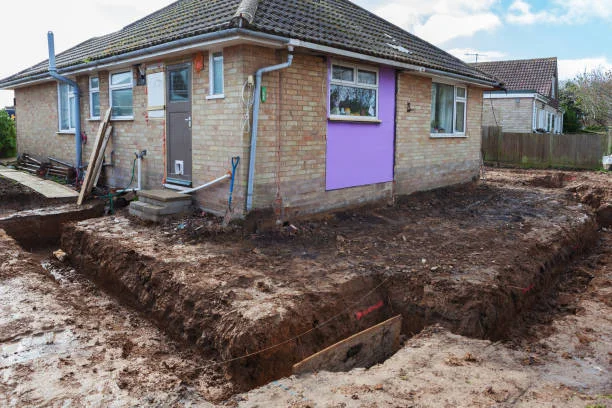
When you’re planning an extension for your London home, you probably don’t think much about what’s happening underground. But foundations matter. A lot. Get them wrong and your whole project fails. Understanding how deep foundations actually need to go for UK home extensions, or learning what factors determine the depth your specific property requires, helps you grasp why this isn’t something to guess about.
If you want to know more about how Extension Architecture assesses foundation requirements for your property, or understand what Building Regulations actually specify for foundation depth, you’ll see why professional engineering matters before any digging happens. Foundations are literally what everything else sits on. Get this right and your extension stands solid for decades. Get it wrong and you’re looking at expensive problems later.
Building Regulations for Foundation Depth in the UK
Building Regulations specify foundation requirements in the UK. These aren’t optional guidelines. They’re mandatory requirements.
The regulations don’t give you one magic number. Instead, they specify that foundations must be deep enough to reach suitable bearing ground. What’s suitable depends on your specific soil conditions.
This is why soil assessment matters so much. Different areas have different ground conditions. Clay. Sand. Chalk. Rock. Each requires different foundation approaches.
Building Control requires evidence that foundations meet requirements. This comes from a soil investigation. You can’t just dig and hope. You need a surveyor or engineer to assess ground conditions first.
The regulations also specify minimum widths for foundations depending on the loads they’ll support. A single storey extension needs narrower footings than a double storey. The more weight, the wider the footing needs to be.
Extension Architecture knows these regulations inside out. They ensure any foundation design meets current Building Regulations requirements.
Minimum Foundation Depth for Single-Storey vs Two-Storey Extensions
Single storey extensions typically require shallower foundations than double storey. That makes sense. Less weight means less foundation depth needed.
Click here to read more about the foundation depth for 1 storey building.
For a single storey, foundations might be 600mm to 900mm deep depending on ground conditions. That’s roughly 2 to 3 feet. For good ground, you might get away with 500mm. For poor ground, you might need deeper.
Double storey extensions usually need deeper foundations. Maybe 1000mm to 1500mm or deeper depending on ground conditions and building design.
But here’s the thing: these are generalizations. Your specific depth depends on your specific soil. A surveyor determines this by actually testing your ground.
London soil varies. Some areas have stable ground. Some areas have clay that shrinks and swells. Some have areas with underground utilities at specific depths. You need to know what’s under your property specifically.
That’s why architects and engineers don’t just guess. They assess your specific conditions and design accordingly.
| Extension Type | Typical Depth Range | Factors Affecting Depth | Soil Investigation Required |
| Single Storey | 600-900mm | Ground type, building weight, water table | Yes |
| Double Storey | 1000-1500mm+ | Ground type, building weight, water table | Yes |
| Poor Ground | 1200mm+ | Unstable soil, clay, seasonal movement | Yes, essential |
| Good Ground | 500-600mm | Stable soil, suitable bearing capacity | Yes, minimum |
Rule of Thumb for Domestic Foundation Depths
If you’re looking for a rough starting point, traditional rule of thumb says go at least 1 meter deep. That’s been the standard for decades in the UK.
But it’s just a starting point. Not gospel. Your specific situation might require more. Might require different approaches entirely.
The reason for depth is getting below the frost line and below any seasonal ground movement. Shallow foundations can shift with ground freezing and thawing. Deep foundations sit in stable ground that doesn’t move seasonally.
In London, frost line is typically around 900mm to 1000mm. Go deeper than that and you’re safe from frost heave. That’s why 1 meter became standard.
But other factors might mean you need deeper. Underground water. Expansive clay. Previous building issues. These all influence what depth actually works.
Factors That Affect How Deep Your Extension Foundations Need to Be
Multiple factors determine foundation depth for your specific property.
Ground type is the biggest factor. Clay behaves differently than sand. Chalk behaves differently than both. Your soil type determines bearing capacity and movement characteristics.
Water table matters. If groundwater is high, it affects foundation design. You might need deeper footings or special drainage solutions.
Building weight affects depth. A heavier building needs deeper or wider foundations. Double storey is heavier than single storey.
Previous ground disturbance matters. If your property had mining, previous construction, or other ground work, you need to know about it.
Proximity to trees affects foundations. Tree roots can cause ground movement. Clay near trees shrinks as trees absorb moisture. This causes seasonal movement.
Underground utilities constrain options. Sewers. Water mains. Gas lines. You can’t dig where utilities exist. Sometimes this affects foundation location or depth. That’s why knowing the exact positioning of any Utility Pipe Supply is crucial before planning your footings—it ensures no interference and avoids costly damages during excavation.
Neighboring properties matter too. If you’re terraced or semi detached, foundations connect to neighboring properties. You need to coordinate.
Extension Architecture considers all these factors. They don’t just dig deep. They assess conditions and design appropriately.
More about the design and build company in london.
Typical Footing Depth for UK House Extensions (With 2025 Updates)
Current Building Regulations for 2025 haven’t fundamentally changed foundation depth requirements from recent years. The principles remain the same.
Suitable bearing ground is the requirement. Finding it requires investigation. Building Control expects evidence that you’ve identified suitable ground.
For London specifically, typical depths are running 900mm to 1100mm for single storey in average ground. Double storey often runs 1200mm to 1500mm.
But London soil varies by area. South London has different conditions than North London. East London differs from West London. You need local knowledge.
Extension Architecture works in London regularly. They know typical ground conditions by area. They know local Building Control expectations. They coordinate soil investigations efficiently.
Why You Can’t Skip Professional Assessment
Some homeowners think they can eyeball this. Dig down, see what’s there, build on it.
That’s how problems happen. Building Control won’t approve it. Your extension settles unevenly. Cracks appear. You’re dealing with expensive repairs.
Professional assessment costs money upfront. Usually 300 to 800 for a soil investigation. Worth every penny compared to fixing foundation problems later.
An engineer or surveyor assesses your ground. They provide a report. The report specifies suitable bearing depth for your property. Building Control approves it. You build confidently.
Building Control and Foundation Inspections
Building Control inspects foundations during construction. They verify that foundations reach the depth and bearing capacity specified.
The inspection happens before concrete is poured. They check the foundation trench. They verify depth. They check for any issues that change the requirements.
If foundations don’t meet specifications, you don’t proceed. You dig deeper or adjust the design. It’s not optional.
This inspection protects you. It ensures your extension is built on solid ground properly.
Extension Architecture’s Approach to Foundations
Extension Architecture doesn’t leave foundations to chance. They coordinate soil investigations early. They understand London ground conditions. They work with Building Control to ensure specifications are met.
They know that solid foundations mean successful extensions that last decades without problems.
When you’re planning your London extension, get professional foundation assessment. Don’t guess. Don’t cut corners. Get it right from the start.